
CircuBlog

Circulove’s Guide to Natural and Effective Skincare. Discover the secrets of fermented skincare and expert insights on why fermentation is the future of beauty.
In skincare, fermentation is typically achieved using lactic acid bacteria or yeasts. However, there are quality differences in how fermented skincare is manufactured.
Many brands simply add individual, pre-fermented ingredients to a formula, which only enhances the effect of that specific component. You can typically find these on the INCI (ingredients) list under terms like "ferment," "filtrate," or "lysate."
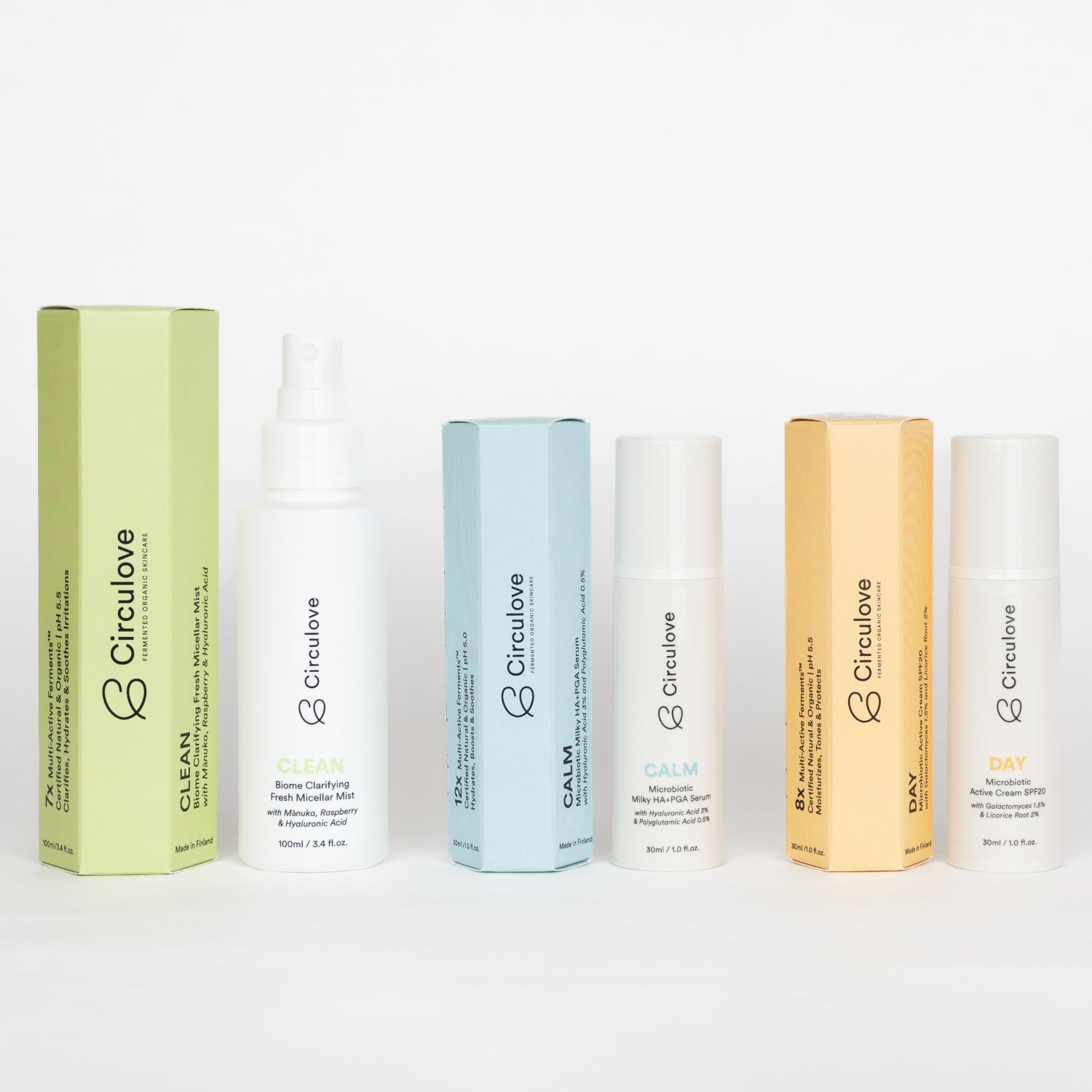
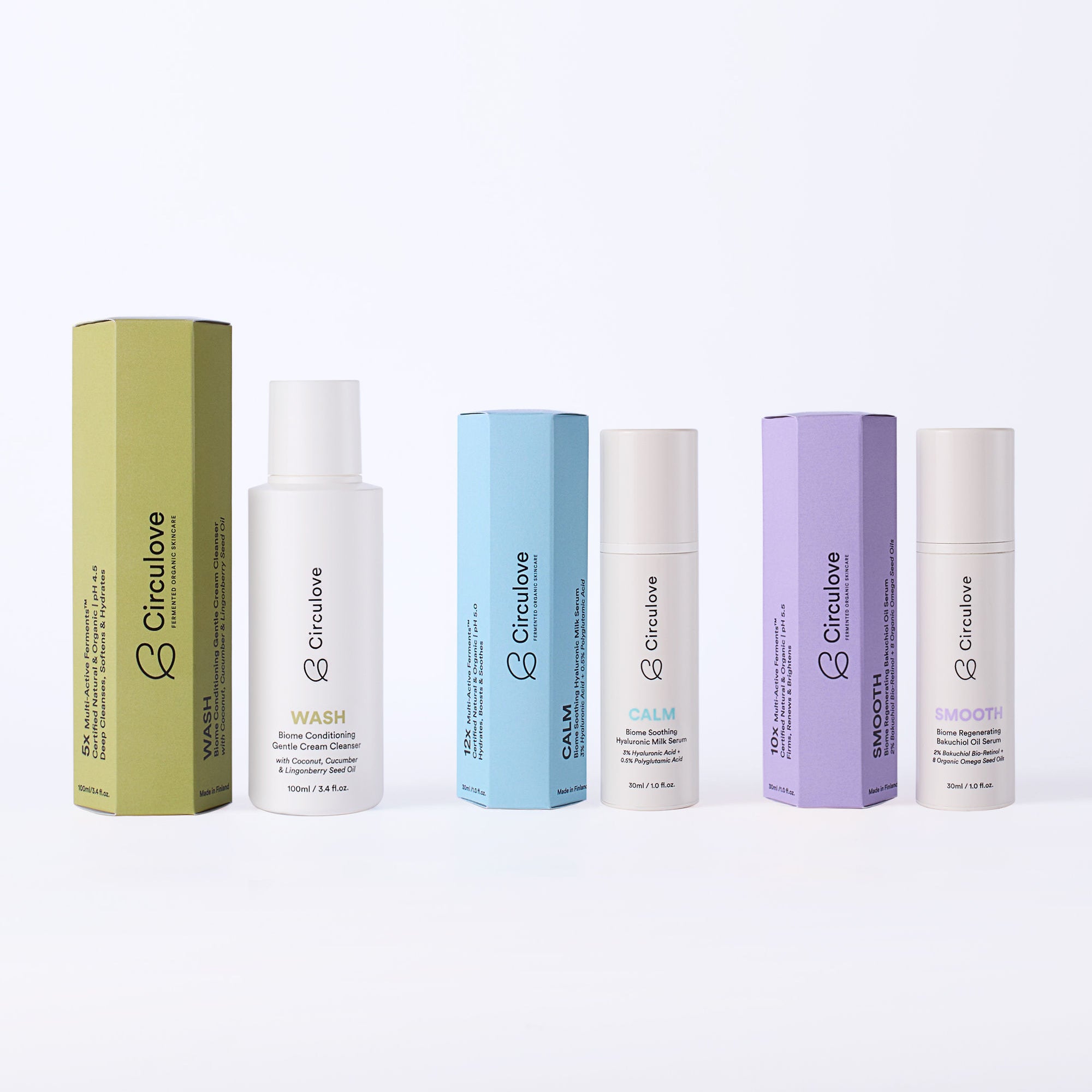
Premium ranges, such as the Finnish brand Circulove, ferment all their active ingredients. Circulove’s signature Nordic "cool-fermentation" method ensures full nutrient density and optimal tolerance even for the most sensitive skin. While Circulove clearly marks its fermented actives in the INCI list, it is worth noting that the new bioactive compounds created as a result of the fermentation process do not always appear separately on the label.

Summer skin has completely different needs than winter skin. Sun, seawater, and sweat dehydrate the skin’s surface, so the golden rule of summer skincare is simple: less is more. Swap heavy creams for lightweight, multi-purpose products and give your skin a well-deserved vacation. The secret to easy, glowing summer skin comes down to three words: protect, hydrate, and soothe.
Read our beauty therapist's 4 targeted tips for a carefree summer.

Menopause is not just a passing phase; it is a major biological turning point that changes the needs and functions of your skin for the rest of your life. The drop in estrogen levels directly impacts the skin's ability to produce collagen, retain moisture, and maintain a protective microbiome.
The Finnish Circulove skincare line was specifically developed to meet these challenges. We utilize advanced bio-fermentation, which optimizes the absorption of active ingredients precisely when hormonal changes put the skin to the test. Read our expert tips on managing hormonal skin changes during menopause and beyond.

The Differences Between Dehydrated and Dry Skin
Dehydrated skin lacks water hydration, whereas dry skin lacks both water and oil (lipids). During winter, any skin type can easily become sensitized. Healthy, glowing skin requires both oil and moisture; a lack of oil can manifest as roughness, flaking, and a loss of elasticity.

Are you looking for skincare products that are both effective and safe?
The choice is clear: certified natural & organic cosmetics.